


Page 36 - GUIDO RENI 2017
P. 36
The Country Dance also shows some knowledge of Ludovico. His Family Portrait in
                               The Hague may have influenced some of our figures as might The Rape of Europa
                               fresco in Palazzo Fava, Bologna, which Guido knew intimately. The voluminous,
                               puffy drapery with its linen folds in our picture, finds echoes in the earlier Palazzo
                               Magnani figures by both Agostino and Annibale. Again, echoes of Niccolò dell’
                               Abate’s concerts survive in the background of Annibale’s Return of the Prodigal Son
                               (Munich, Bayerisches Staatsgemäldesammlungen), all of which suggests a certain
                               Bolognese heritage for the Country Dance.

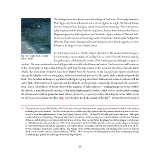
Fig. 12e. Guido Reni, Country  As noted above (and in n.10) the subject depicted in The Country Dance intrigues,
Dance, detail.                 for is it simply a representation of a village fete or return from the hunt? Certainly,
                               the gathering is celebrating the return of the hunting party, although no game is

evident. The more aristocratic men hold guns whereas others hold staves as beaters. Such events are still common

in the countryside in Italy today during the wild boar hunting season or the caccia for the all too rare pheasants

which, like most avian creatures, have been blasted from the heavens. In the Country Dance figures wend their

way up the hillside to the meeting place; others on horseback proceed to the castle while a shepherd guards his

flock. The Arcadian landscape is populated with figures going about their business and a man crouches to fill his

water flask. Wine has flowed copiously and the flasks lie on the ground; a man in the foreground, the worse for

wear, dozes. Everywhere Reni has observed the minutiae of daily existence – washing hangs out to dry outside

the church, a man fishes in the stream, a dog barks frightening the ducks, a child teeters on the plank crossing

the stream and a matron grasps his hand. Above, in the tree, a parrot perches observing the scene while, in an
act of bravura, Reni paints two flies (Fig. 12e) stuck to the fresh varnish of the sky13. Clearly the artist enjoyed

13.	 The parrot seems an unlikely bird to find in the Apennines and may have some mysterious connotation related to the subject
     indicating an exotic location. The flies in the sky are an artifice used by northern still life painters which may have been con-
     veyed to Reni through his master, Denis (or Denys) Calvaert (1540 – 16 April 1619) who was born in Antwerp. This again
     would indicate an early dating. Flies generally denote corruption. A fly hovering over a church official or nobleman indicates
     disfavour with the king or corruption and dereliction of duty. Flies can symbolise the plague but the last plague in Emilia was
     in 1580 followed by the great famine 1591-93 which persisted until the 1600s and led to the even greater plague in Bologna
     in 1630 which wiped out half the population. During the famine mortality rocketed and infant births decreased from by 45-
     65% according to locality (see Guido Alfani, ‘The Famine of the 1590s in Northern Italy. An Analysis of the Greatest “System
     Shock” of Sixteenth Century’, Histoire & Mesure, XXVI-1, 2011. It may be a fanciful supposition but Reni’s landscape perhaps
     is celebrating a ‘golden Arcadian age’ before the deprivations.

                               36

