


Page 35 - GUIDO RENI 2017
P. 35
the Marseilles picture is elegantly dressed,

the lady’s peer, whereas in the Reni the male

figure is poorly dressed in similar attire to

the country bumpkin musician. They seem

an ill-matched pair and this writer suspects

that there may be a subplot where the

male figure may be a lover in disguise or
a person of quality who is unrecognised11.

The grouping of well-dressed, seated ladies

chatting to one another on the left is also

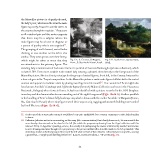
similar. They wear aprons over their finery,   Fig. 12c. A. Carracci, St Margaret, Fig. 12d. Guido Reni, Country Dance,
                                               Rome, S.Caterina dei Funari, detail. detail.
which might be taken to mean that they
are attendants to the primary figure. The

standing lady is reminiscent of Ludovico Carracci’s portrait of Lucrezia Bentivoglio (private collection), which

is dated 1589. Even more notable is the seated lady wearing a pleated skirt directly in the foreground of the

Marseille picture. She is a direct prototype for the group of seated figures, front left, in the Country Dance and to

a lesser degree in the Toeput composition. In the Marseilles picture a rustic male figure doffs his hat to the seated
woman and appears to indicate a kiss by placing two fingers to his mouth12. One wonders if Reni might also

have known Annibale’s Landscape with St John the Baptist (formerly Mahon Collection and now in the Pinacoteca

Nazionale, Bologna) when it was in Rome. It has been identified with a picture recorded in the 1693 Borghese

inventory and also has a similar stream cascading out of the right foreground (Figs. 12a & b). Further parallels

in the handling of Reni’s distant hilly landscape may also be drawn with the earlier Annibale St Margaret (Rome,

Sta. Caterina dei Funari) where tiny figures wend their way on a zig-zagging path towards buildings surrounded

by frond like trees (Figs. 12c & d).

11.	 At the turn of the seventeenth century it would have been quite unthinkable for a country commoner to ask a lady of quality
     to dance.

12.	 Catherine Johnston writes in commenting on this essay (Ms. communication) Reni clearly draws on it, his scene avoids the
     more bawdy elements such as the dwarf at the left (for which the preparatory drawing from the Oppé collection sold this
     summer 2016). In Agostino’s painting, as here, the novelty is in juxtaposing the classes reinforced by another well-known
     Louvre drawing sometimes thought to be preparatory to the picture in Marseilles, but still considered to be by Annibale. This
     describes a similar orchestral group in the trees at the left while in front of them stands a refined lady seen in profile, wearing
     a pointed hat, a simple youth kneeling before her’. (Louvre, Inventaire italien, t. VII Q718).(Fig. 11).

                                               35

