


Page 34 - GUIDO RENI 2017
P. 34
as a work of Agostino ‘Nell’ ore appunto di

                                                                quiete e di consolazione, stanchi dal lavoro nella

                                                                sala de’ signori Favi, opero per svariarsi e pender

                                                                lena Agostino qu’ paesi toccati di sopra, ov’e

                                                                un ballo di villani, e i piferi sul palco in uno,

                                                                e nell’altro quella caricatura del cappellaccio,

                                                                comprati dal Grato, poi venduto dallo stesso

                                                                cento venti doble a Monsù della Frè scudiero del
                                                                Re Cristianisimo...’ (Malvasia, I, p.324)10.

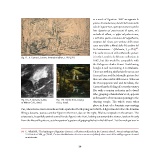
                                                                The earliest record of the Marseille picture

Fig. 11. A. Carracci, Louvre, Inventaire italien, t. VII Q718.  is in the Loménie de Brienne collection in
                                                                1662, but this would be compatible with

                                                                the Bolognese dealer Cesari Grati having

                                                                bought it and mentioning it to Malvasia.

                                                                There are striking similarities between our

                                                                Country Dance and the Marseille picture but

                                                                there are also notable differences. Whereas

                                                                the Reni appears rural and Arcadian, the

                                                                Carracci has the feeling of a courtly country

                                                                fête with a country orchestra and a dwarf

                                                                who, grasping a chamberlain’s rod, appears

Fig. 12a. A.Carracci, St John,  Fig. 12b. Guido Reni, Country   as the master of ceremonies pointing to the
ex Mahon Coll., detail.         Dance, detail.                  dancing couple. The whole scene takes
                                                                place in front of a fountain representing

Pan, whose home was in Arcadia and who symbolised both spring and rebirth. A figure kneels before the fountain

filling a boraccia, just as a similar figure in the Reni, also on the right, fills his receptacle in the stream. The

aristocratic, beautifully attired central female figure in the Reni, looking out towards the viewer, is taken directly

from the Marseille picture, as is her partner’s gesture of gripping his hat in his left hand. Yet the male partner in

10.	 C. Whitfield, ‘The landscapes of Agostino Carracci : reflexions on his role in the Carracci school’, Actes du colloque de Rome,
     2-4 Octobre 1986, pp.79-80. Curious that Malvasia refers to commoners (villani) when most of the staffage appears dressed
     as aristocrats.

                                                  34

