


Page 27 - GUIDO RENI 2017
P. 27
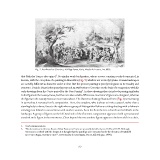
Fig. 2. Attributed to Guercino, A Village Dance, Paris, Musée du Louvre, Inv.6895.

that Nicholas Turner also opined5. No similar work by Agostino, whose oeuvre remains poorly documented, is
known, with the exception of a painting in Marseilles (Fig. 9) which is not securely by him. Roman landscapes
are notably different in character and it is clear that the present painting is purely Bolognese in its tonality and
structure. Daniele Benati subsequently proposed an attribution to Guercino on the basis of a comparison with his
early drawings from the Cento period for the Casa Pannini6. In these drawings there is indeed a passing similarity
to the figures in the Country Dance, but there are also notable differences: Guercino’s figures are elongated, whereas
the figures in the Country Dance are more naturalistic. The Guercino drawing illustrated here (Fig. 2) is interesting
in as much as it reverses Reni’s composition. Here, the contadino, who is about to invite a seated, rather than a
standing lady to dance, faces to the right where a group of distinguished ladies are sitting chatting with a debonair
standing man behind in conversation with another woman. As in the Reni there is a church on the hillside in the
landscape. A group of figures on the left hand side of the Guercino composition appears to hold a processional
standard and a figure in the tree waves. Close beyond the tree another figure appears to be born aloft in a chair.

5.	 Oral communications.
6.	 The decorations to the two floors of Casa Paninni in Cento are generally dated between 1615 and 1617. Although
	 Guercino is credited with the designs it is thought that the paintings were executed under the direction of Battistelli
	 (see Prisco Bagni, Guercino a Cento – La Decorazione di Casa Pannini, Nuova Alfa Bologna, 1984.)

                                                  27

