


Page 26 - GUIDO RENI 2017
P. 26
I t has always been assumed that Guido Reni never indulged as a painter of genre or landscape compositions. This
        despite the fact that his drawings would seem to indicate that he did have an interest in this direction. Such an
        assumption was probably based on the fact that Carlo Cesare Malvasia, his primary biographer, is silent on the
        subject and does not record any specific, purely landscape paintings3. In some ways this may appear strange.
        Both of Reni’s Bolognese or Emilian contemporaries, Guercino and Domenichino, did, however, engage in
the painting of pure landscapes. Guercino’s, executed comparatively early in his career, were perhaps influenced by
Ferrarese painting. Domenichino, on the other hand, continued to paint influential classical landscapes after he settled
in Rome. Reni’s depiction of landscape obviously stems from his training in the Carracci workshop.

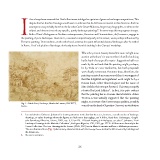
Fig. 1. Guido Reni, Landscape, Musée du Louvre, INV 8927,  When the present Country Dance first came to light in an
Recto.                                                     auction at Bonham’s it was not then identified as being
                                                           by the hand of any specific master. Suggestions had been
                                                           made by the art trade that the painting might, perhaps,
                                                           be by Viola or even Tamburini, but both proposals
                                                           were clearly erroneous. For some time, therefore, the
                                                           painting remained anonymous and then it was suggested
                                                           that this delightful and significant work might be by a
                                                           Roman hand, rather than Bolognese and the name of
                                                           Sisto Badalocchio was put forward. This was promptly
                                                           rebutted by Erich Schleier4. In fact, it is quite evident
                                                           that the painting has no Roman characteristics. Aidan
                                                           Weston-Lewis initially suggested that the painting
                                                           might, on account of its Carraccesque qualities, possibly
                                                           come from the hand of Agostino Carracci, an attribution

3.	 I am indebted to Catherine Johnston for drawing attention to the fact that there are, however, a small number of landscape
     drawings, or rather drawings where the figures are little more than staffage, see V.Birke, Guido Reni: Zeichnungen, Graphi-
     sche Sammlung Albertina, Vienna, 1981, nos. 3, 13 and 14. A fourth drawing is in Budapest; see also C. Johnston, ‘Reni
     Landscape Drawings in the Mariette Collection’, Burlington Magazine, CXI, 1969, pp. 377-8. All four were formerly in the
     Crozat Collection. The two drawings in the Louvre (8926, 8927) are in Mariette mounts and have a Malvasia provenance.
     The one illustrated here (Fig. 1) shares many characteristics with the Country Dance, such as the hill crowned by buildings and
     the distant sea..

4.	Ms.communication.

                                                           26

