


Page 31 - Francis Cotes - A winning end-game
P. 31
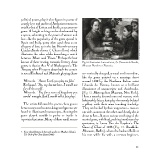
political power-play it also figures in poems of                    Fig 14. SOFONISBA ,ANGUISCIOLA Le Giocatrici de Scacchi,
courtly love and medieval Arthurian romances,                       Museum Narodwe w Poznaniu.
notably that of Tristan and Isolde,as an amorous
game. A knight or king can be checkmated by                         are erotically charged, sensual and immediate,
a queen, submitting to the power of women and                       like the game painted on a marriage chest
love. As the popularity of the game spread in                       around 1480 by the Northern Italian artist
Spain and Italy, poets often used chess as an                       Liberale da Verona, known as a brilliant
allegory of love, as in the late fifteenth-century                  illuminator of manuscripts and choirbooks.
Catalan Scachs d’amor ( Chess of love) which                        (Fig. 12. Metropolitan Museum, New York).
illustrates the rules while describing a match                      Here a smartly dressed man and woman, with
between Mars and Venus.7 Perhaps the best                           fashionably frizzy hair play decorously behind
known of these teasing, romantic literary chess                     a pillar, with their arms touching tenderly.
games is that in Act V of Shakespeare’s The                         They are backed by their supporters – men on
Tempest, when Prospero draws back the curtain                       one side, women on the other, and clearly she is
to reveal Ferdinand and Miranda playing chess:                      about to lose. A more serious rendering of the
                                                                    marital game, with loud, pushing interference by
 Miranda. ‘ Sweet Lord, you play me false’                          spectators, is Lucas Van der Leyden’s The
 Ferdinand. ‘No, my dea rest love, I would not                      Game of Chess of 1508 (Fig. 13. Staatliche
 for all the world’.                                                Museum, Berlin), where the husband lolls at
 Miranda. ‘Yes, for a score of kingdoms you                         his ease while his wife, a nervous beginner,
 would wrangle A‘ nd I would call it fair play’.

 The artists followed the poets: chess games
between men and women, kings and queens, are
found in illuminated manuscripts, showing the
game played outside in parks or inside in
tapestried interiors. Many of these small scenes

7. For a cultural history of chess and gender, see Marilyn Yalom’s
   The Birth of the Chess Queen (2005)

                                                                    31

