


Page 33 - Francis Cotes - A winning end-game
P. 33
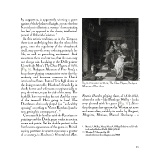
by supporte rs, is apparently winning a game         Fig 16. CORNELIS DE MAN, The Chess Players, Budapest
against a black-helmeted knight, a scene that has    Museum of Fine Arts.
been taken to illustrate a woman ‘ demonstrating
her lust’, as opposed to the chaste, intellectual    Francis Dundas playing chess, of 1810-1812,
pursuit of Sofonisba’s sisters. 9                    where the wife – like Penelope Welby - looks
                                                     very pleased with her game (Fig. 17). Since
 In this artistic tradition, as in the Tempest,      then the game has appeared in Western art more
there is an underlying hint that the rules of the    and more often, notably in works by Sargent,
game, even the regularity of the chessboard          Magritte, Matisse, Marcel Duchamp - a
itself, may provide some ordering principle for
life, as well as provoking excitement. And           9. Naomi J. Miller, Naomi Yavneh, Sibling Relations and Gender
sometimes there is a hint too, that the man may         in the early Modern World, (2006) 175-80
not always win. Looking at the Delft painter
Cornelis de Man’s The Chess Players, of 1670,        10. ‘Martin S’, Chess in Art IX
(Fig. 16. Budapest Museum of Fine Arts), a              :streathambrixtonchess.blogspot.com/2008
keen chess-playing commentator notes that the
modesty and decorum common to Dutch
interiors has flown. Instead ‘It is high drama at
the living room table. Husband’s hands fly in
shock horror and wife turns conspiratorially to
you, the viewer, to put her side of the story. The
kerfuffle has even woken the cat. And the cause
of the turmoil? He’s going to lose! The
D u tchman obviously played (an “unhealthy
opening” according to Victor Korchnoi) and is
now getting his comeuppance’. 10

 Cotes would be familiar with the Renaissance
paintings and the Dutch genre works in auction
rooms and prints. Yet his double portrait is the
first known appearance of the game in British
society portraits: its nearest successor, a quarter
of a century, is Raeburn’s General and Mrs.

                                                     33

