


Page 34 - Francis Cotes - A winning end-game
P. 34
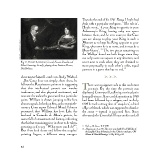
Fig 17. HENRY RAEBURN, General Francis Dundas and       Towards the end of his 1761 Essay, Hoyle had
Eliza Cumming, his wife, playing chess, Aniston House,  dealt with a particular end-game. ‘ The rule is’,
Midlothian.                                             Hoyle wrote, ‘ if your King is opposite to your
                                                        Adversary’s King, having only one space
                                                        between them, and he is to move; in that Case
                                                        you are always to play your King in such a
                                                        Manner as to keep his King opposite to your
                                                        King, whenever he is to move, and it must be a
                                                        Draw Game’. 11 The two pieces remaining on
                                                        the Welbys’ board are both kings: since they
                                                        can only move one square in any direction, and
                                                        never next to each other, they are destined to
                                                        move perpetually in each other’s orbit, equal
                                                        partners in a game that has no end.12

chess master himself –and even Andy Warhol.                              lll
 But Cotes does not simply show chess, he
                                                        There was a poignant coda to this exuberant
follows the Renaissance painte rs in suggesting             portrait. By the time the portrait was
that this intellectual pursuit can involve              displayed, Cotes was ill, suffering continual pain
tenderness, and also physical excitement, and           from gall-stones. A successful operation in 1768
moreover he makes the game work to a particular         had been followed by a relapse, and in July
point. William is shown jumping to his feet,            1770 he took a strong dose of ‘soap-lees’, a kind
about to speak. It looks at first, as the twentieth-    of lye or bleach, which was supposed to dissolve
century Cotes expert Edward Mead Johnson                the stone – instead it poisoned him. Soon
presumed, that William has lost. Like the               afterwards the Cavendish House studio and all
husband in Cornelis de Man’s picture, he
seems full of amazement and dismay, indicating          11. Ibid., p.50, Game XXVII
that his last remaining piece is about to be taken,     12. Johnson, op. cit, p. 33. The move was clarified by Phil Ehr, of
gesturing as if to say “What more can I do?”’.
But if we look closer and follow the couples’              the English Chess Federation, for the Christies catalogue, Old
pointing fingers, a different story emerges.               Master & British Paintings, 3 July 2012, p.139

34

