


Page 68 - GUIDO RENI 2017
P. 68
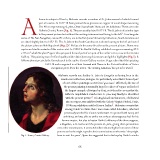
A favourite subject of Reni’s, Malvasia records a number of St. Johns several of which formed
                 part of a series. In 1617-18 Reni painted three pictures on copper of ovoid shape measuring
                 50 x 40 cm representing St. John, Christ Crowned with Thorns and the Addolerata. These are in the
                 Galleria Corsini, Rome (Fig. 1). They are usually dated 1617-18. The St. John is of a similar type
                 to the present picture but without the writing instrument and facing to the left1. A rectangular
series of The Four Evangelists, canvas 78 x 65cm, are in the Bob Jones University Collection, South Carolina and
are dated slightly later to 1632-33. The St. John in the South Carolina set is shown leaning to the left and out of
the picture plane and holding a book (Fig. 2)2. He faces in the same direction as the present picture. Numerous
copies and studio variants of this series exist. In 1990 The Hazlitt Gallery exhibited a copper measuring 47.5
x 39 cm3 which Stephen Pepper then proposed formed part of a repeat of the earlier series, now in the Corsini
Gallery. This painting was of refined quality with relatively strong chiaroscuro and golden highlights (Fig.3). It
follows almost precisely the formula used in the earlier Corsini Gallery version. Pepper also dated this painting

                        1633-34 and recognised in a Christ Crowned with Thorns in the Detroit Institute of Arts a
                              companion piece from the series. The missing Addolerata has yet to be traced.

Fig. 1. Rome, Corsini Gallery.   Malvasia records one further St. John the Evangelist as having been in the
                                   Zambeccari collection, Bologna. He particularly notes that it formed part
                                     of a set of three paintings executed on ‘gran rame’. Effectively the size of
                                      the present painting is unusually large for a sheet of copper and indeed
                                       the largest example of its type by Reni, so it therefore seems that the
                                        hitherto unpublished Zambeccari St. John may finally be identified
                                        with the present picture4. The Magdalen from this series, of identical
                                        size on copper, was exhibited with the Galerie Virginie Pitchel , Paris,
                                        1998 in an exhibition entitled Sacra et Profana5. Malvasia recounts that
                                       among Guido’s retinue there was a man called Belcollare, who had
                                       previously worked for Count Zambeccari. He proved both canny and
                                      ambitious and was able to strike not only an advantageous deal for his
                                    former master, but also to hasten Guido’s delivery of the three coppers,
                                  a Magdalen, a St. Cecilia and the present St. John, giving them precedence

                                over other commissions. It seems Belcollare obtained gifts from some of these
                                patrons so that he might expedite their commissions as otherwise ‘they might
                                have to wait for years’. Spear has suggested that in his heyday Guido’s studio

                                68

