


Page 58 - GUIDO RENI 2017
P. 58
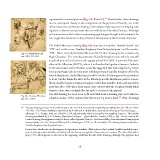
represented in a seated position (Fig. 6A, B and C).24 Nevertheless, these drawings
do not correspond closely to the composition of the portrait of Camillo, nor is the
official character and hieratic bearing of the subject really any more in keeping with
Agostino’s other known portraits than it is with those of the other Carracci. Although
not as inventive as his brother in expressing psychological insight into his subject, he
too sought this dimension in his portraits at the expense of their hieratic character.
©British Museum The British Museum drawing (Fig. 6a) bears the inscription ‘Annibal Carachi’ and
‘973’ and on the verso ‘Camillus/Burghesius/Card.lis/qui fuit/papa’ and the number
©Albertina Fig. 6a. British Museum ‘974’. More recently the British Museum file for their drawing bears a notation by
Inv. 1895-915-693 Hugo Chapman: ‘The verso has portraits of Camillo Borghese made when he was still
Fig. 6b. Vienna, Albertina a cardinal prior to his election to the papacy as Paul V in 1605. A portrait of the same
Inv. No. 25373 sitter at the Albertina (25373), where it is described as Agostino Carracci, looks to
be the same hand. Aiden Weston-Lewis has suggested that both might be by Guido
Reni and perhaps made in connection with his portrait of Camillo Borghese offered by
Patrick Matthiesen. Rachel McGarry (email 6 October 2010) supports the attribution
to Reni, but she thinks the sitter in the BM study and the Matthiesen picture is more
likely Camillo’s nephew Scipione Borghese rather than Camillo. Both works probably
post-date after 1608 when Reni was in close contact with the Borghese family when
Scipione alone was a cardinal after his uncle’s election to the papacy’.
The BM drawing does not seem to fit well with Reni’s drawing style and Catherine
Johnston is also of the opinion that this is not by Reni’s hand.25 If the drawings
24 The two drawings are found in the Albertina (Inv. No. 25373, B. & V.) and the British Museum (Malcolm Coll. 254, Inv. 1895-
915-693). The Vienna drawing is reproduced by A. Stix and A. Spitzmuller, Beschriebender Katalog der Handzeichnungen….
Albertina, V.1., Vienna, 1941, no. 104 (131 x 139, ink and wash), where it is attributed to Annibale Carracci. The London
drawing is published by J. C. Robinson (Descriptive Catalogue… of John Malcolm, London, 1876, p. 96). On the verso of the
London drawing there appears a study for the so-called Caprarola Christ (D. DeGrazia-Böhlin, Prints and related Drawings by the
Carracci Family, exh. Cat., National Gallery of Art, Washington, 1979, no. 18, Annibale). The drawing bears an inscription:
‘Camillus Borghesius Card.lis qui fecit Capra’.
It is not clear whether the two drawings are by Agostino or Annibale. What is clear is that Cardinal Camillo is probably repre
sented, although why he should be identified with the Farnese stronghold of Caprarola is not evident. The date of Annibale’s
print, 1597, which appears on the rock in the engraving, establishes the date of the drawings, although if by Agostino they
58

