


Page 20 - Francis Cotes - A winning end-game
P. 20
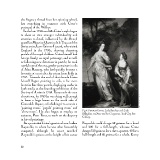
she fingers a thread from her spinning wheel,         Fig 4. FRANCIS COTES, Lady Stanhope and Lady
has something in common with Cotes’s                  Effingham as Diana and her Companion, York City Art
portrayal of the Welbys.                              Gallery.

 In the late 1750s and 60s Cotes’s style began        Reynolds could charge 50 guineas for a head
to show an even stronger individuality and            and 200 for a full-length, whereas Cotes
attention to detail, influenced by the French         charged 20 guineas for a three-quarter, 40 for a
pastellist Maurice Quentin de la Tour, and the        half-length and 80 guineas for a whole. Every
Swiss artist Jean-Etienne Liotard, who visited
England in the 1750s, drawing charming
pastels of the royal children. Cotes himself had
his eye firmly on royal patronage, and as well
as following new directions in pastels, he took
careful note of the new, gentler portraiture in oils
of Alan Ramsay, who had quickly become a
favourite at court after his return from Italy in
1757. Towards the end of that decade Cotes
himself began painting in oils, a far more
lucrative line than pastels, displaying works in
both media at the founding exhibition of the
Society of Artists in 1760. Very much the man
about town, by 1763 he was doing well enough
to lease a large house on the south side of
Cavendish Square, refurbishing it to contain a
‘painting room’, ‘pupils’ painting room’ and
‘shew room’. He also began to employ an
assistant, Peter Toms, to work on the drapery
in his oil paintings.

 As a portraitist Cotes’s great rival was Joshua
Reynolds, to whom he was often favourably
compared, although he never matched
Reynolds’s prices: at the height of his career

20

