


Page 10 - Francis Cotes - A winning end-game
P. 10
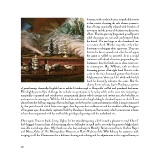
however, with mordant humor, instead adds a twist
                                                          to this contest elevating the role of mere pawns to
                                                          that of kings nominally imbued with freedom of
                                                          movement and the power of decision over their own
                                                          affairs. The two sparring kings stand proudly erect
                                                          while the pawns are cast aside and removed from
                                                          the board. The two kings on the chessboard1 are
                                                          in constant check. Neither may take or therefore
                                                          dominate or subjugate their opponent. They are
                                                          destined to dance around each other for as long as
                                                          the game is willed to proceed. It is a social
                                                          statement well ahead of its time propounding the
                                                          dominance that the female sex so often exerts over
                                                          its counterpart. He, William, with an almost
                                                          disarming gesture of his right hand flexes it at the
                                                          wrist in the time honoured gesture that denotes
                                                          helplessness or ‘what can I do’ while with his left
                                                          hand he discretely indicates the cause. But the
                                                          charm, for me at least, lays in Penelope, a woman
of great beauty, classically English but so unlike Gainsborough or Reynolds’ coiffed and powdered duchesses.
Her slightly parted lips challenge the onlooker to participate in her ploy while at the same time imparting a
marginally coquettish and mischievous conspiratorial glance which entraps and invites you, the beholder, to
participate in her stratagem. With her left hand she indicates her king holding her husband’s piece in check. I can
almost hear the dull tap-tapping of her index finger on the board to command attention while I remain entranced
by that parted mouth which hints at an upper class lisp were she to address me and the steadfast unflinching gaze
of her green eyes. I am utterly captivated both by Penelope’s beauty and her vivacity which evince in me a desire
to have been acquainted with her and had the privilege of sparring with her undoubted wit.

Once again I have to thank Jenny Uglow for her stimulating essay which is such a pleasure to read. Once I
had dragged Jenny in front of the painting she too fell under its spell and it was with the greatest delight that I
was able to exchange ideas. My thanks are also due as always to Beverly Brown, as well as to Andrea Bayer
and Mary Zuber of The Metropolitan Museum, to Karin Kyburz of the Witt Library for assistance with
imaging, to all the Chestermans for a delicate cleaning and relining and for adjustments to the original frame, to

10

